


Melastoma affine - Blue Tongue: Growing It, Making With It, Sharing It
- Isis

- 18 hours ago
- 3 min read

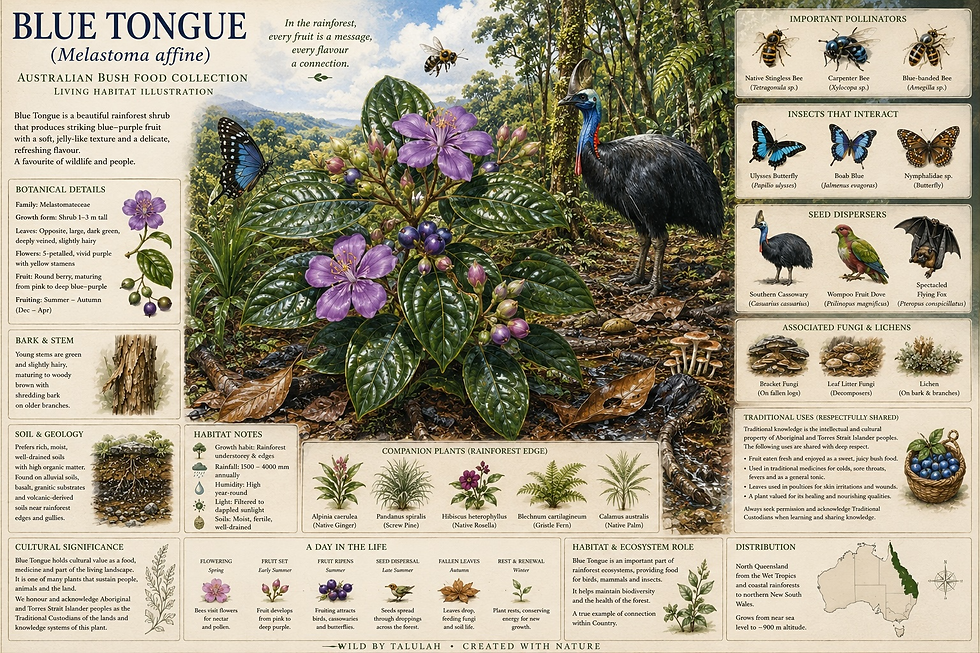
Some plants announce themselves quietly. Melastoma affine is not one of them. The flowers are vivid, almost startling, five wide magenta petals opening around a cluster of golden stamens, blooming from Spring through into summer. And then come the berries. Round, deep blue-purple fruit that stain your tonuge on contact, which is exactly where the common name comes from. Blue Tongue.
This is a plant with deep roots in this country. It is a rainforest shrub, found naturally from the wet tropics of North Queensland down through coastal and subtropical regions to northern New South Wales. Aborigian and Torres Strait Islander peoples have long known and used this plant as food, medicine, and as part of the living landscape. We honeour and acknowledge that knowledge and the custodians who hold it.
We grow Melastoma affine here at Talulah, and it is available now in Forest tubes, ready for your garden.
Growing Melastoma affine
This is a generous, rewarding shrub once it finds its place. It loves well-draining soil, sandy or loam soils suit it well, and it tolerates poor soils and coastal conditions better than many plants you might choose for the same spot. Position it in part shade to full sun. It will reach 1-2m in both height and width, so give it room to become what it wants to be.
Water needs are low to moderate once established. Drought tolerant, yes, but water it while it roots in. That early investment is what earns you the ease later. What sets Melastoma affine apart in any garden is what it brings with it. Blue-banded bees are particularly drawn to it, as are Teddy Bear Bees, which use a specific buzzing technique to vibrate pollen free from the flowers. Butterflies, native stingless bees, and other beneficial insects follow. Plant one and you are not just adding a shrub, you are adding a whole web of life.
The leaves are edible and can be used in herbal teas. The berries fruit from summer through to autumn, maturing from pink to deep blue-purple. The souther cassowary, wompoo fruit dove, and spectacled flying fox all play a role in spreading the seed through the forest. This is a plant that gives and gives. and gives.
From The Garden To The Kitchen
The berries of Melastoma affine make a vibrant, deeply coloured jam that is as beautiful to look at as it is to eat. This is a simple recipe that lets the fruit speak for itself.
🫐 Blue Tongue Berry Bush Jam
The beautiful purple berries create a vibrant spread that's delicious on toast, scones, yoghurt or desserts.
Ingredients
2 cups ripe Blue Tongue berries
½ cup water
½ cup raw sugar or honey (adjust to taste)
1 tablespoon lemon juice
Method
Wash the berries thoroughly.
Place berries and water into a saucepan.
Simmer gently for 10–15 minutes until the berries soften.
Lightly mash the fruit.
Add sugar and lemon juice.
Continue simmering until the mixture thickens.
Spoon into sterilised jars while hot.
Refrigerate after opening.
Serving ideas Fresh sourdough · Scones · Greek yoghurt · Cheesecake topping · Pancakes · Overnight oats
Wild by Talulah Tip
Blue Tongue berries vary naturally in sweetness. Taste before adding all the sweetener so the berry flavour remains the hero.
Grow One of Your Own
Melastoma affine is available now in forest tubes, grown here at Talulah and ready to plant out this season. A plant that feeds you, feeds the bees, and belongs to this country.


Comments