


Embracing the Wisdom of the Elder Tree: A Journey Through Coastal Forests

Updated: Oct 6

I often venture into a nearby coastal forest to learn about myself as a human being connected to an intricate ecosystem. In this beautiful coastal forest, many elder trees stand tall, but one of them began to speak to me. This moment marked a turning point in my journey toward understanding conservation. It revealed how, even with the best intentions, we can misalign ourselves with the natural world. We often misunderstand our role in this vast, intricately attuned ecosystem, which is inherently sustainable.
The Misunderstanding of Sustainability
Sustainability is a term that has become overused, often associated with greenwashing in an industry that feels fragmented. Instead of connecting deeply with our beautiful nature, we sometimes treat it as a commodity—a resource to be exploited for our perceived needs. This mindset can lead us to misunderstand the essence of our relationship with the natural world.

This perspective may seem harsh to some, yet to others, it resonates deeply. My intimate love and affection for this wise elder of the coastal forest guide me. I heard this elder long before I laid eyes on it. It shared stories of our interconnectedness, the energy flowing from deep within the mycorrhizal networks, where life thrives unseen by many. This wisdom is often misunderstood, yet it is always open to sharing its capacity for connection, regeneration, and restoration.
The elder tree spoke of its lineage and the community held within the forest. It invited me to explore, observe, and ask questions about what I could sense before even stepping into the forest. When I entered, the elder guided me through its neural pathways of light vibrations. It knows that it is pure light, oscillating in infinite sound frequencies. This knowingness reached out to me, allowing me to consciously connect and commune with it.

A Journey of Transformation
Coming from a background as a horticulturalist and conservation manager, I once relied on fertilizers, chemical sprays, and heavy machinery. I was taught to cut down trees and eradicate weeds, promoting healthy plants through manipulation. We pumped nutrients into plants, adjusted lighting, and propagated them outside their natural growing seasons—all for the consumer's sake. In bush regeneration, we often plundered without realizing it. Good intentions led us to cut down certain species deemed out of control, suffocating others considered more relevant to the ecosystem.

There were many turning points in my journey. I witnessed endemic bushland being destroyed, home to a myriad of wildlife, with no consideration for where these creatures could be relocated. All this occurred in the name of urban sprawl, contributing to the urban heat island effect. This created an unhealthy environment for those living in newly erected dwellings, with only token trees planted on verges and concrete driveways dominating the landscape.
These areas held remnant bushland, where elder trees were sacred to our Indigenous peoples. They understood the deep connection to nature, engaging in conversations that sometimes required no words. Stories were shared, and the songlines continued, with respect for all being the mantra.
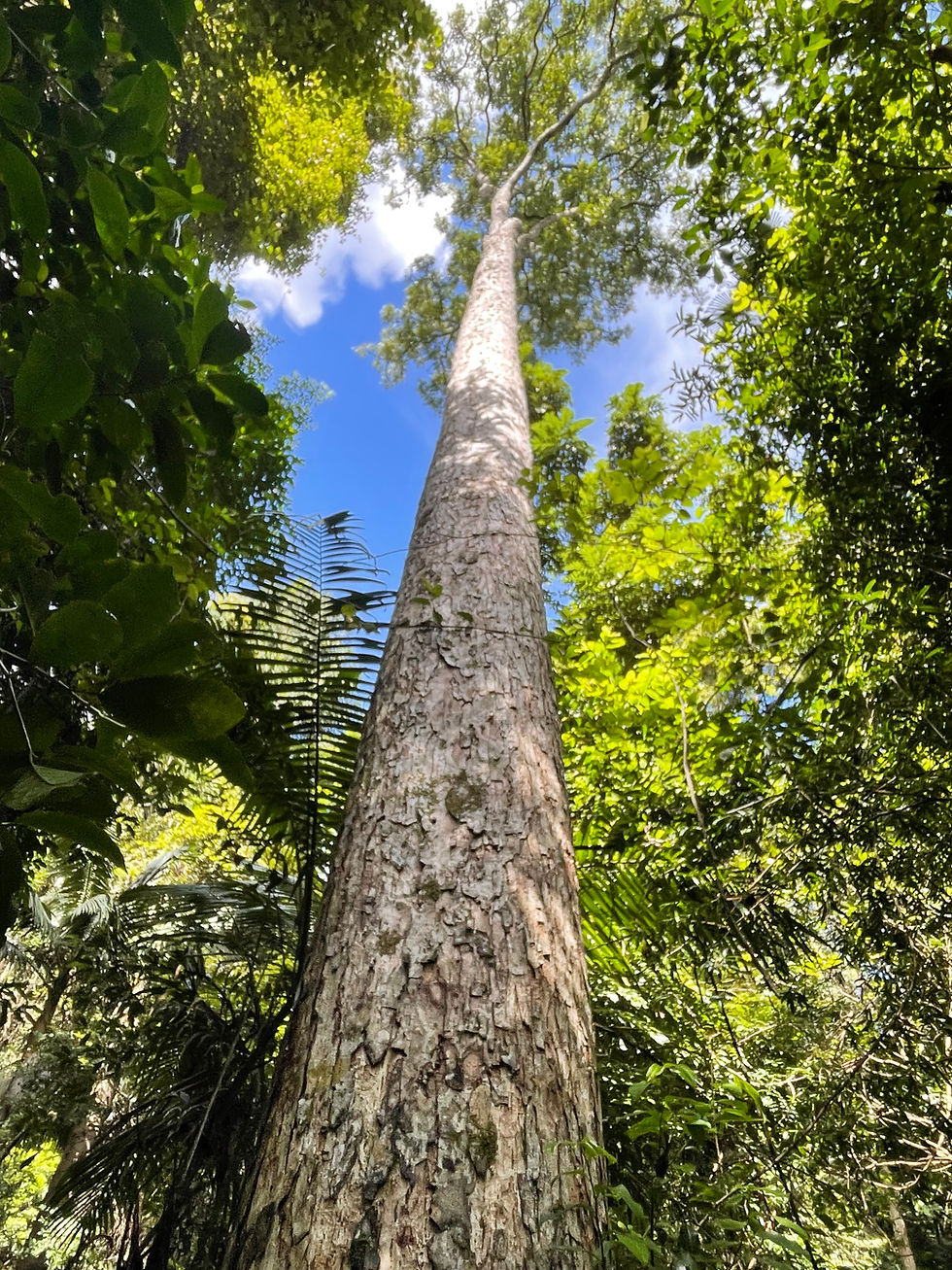
But I digress. Back to the elder tree. One day, it called me into the forest and asked me to follow a path. I did so until I heard the elder say, "Stop, look to your left." When I did, I heard the elder ask, "Am I what you expected?" In that moment, I pondered whether I had any expectations of what the elder tree should look like. This tree was not the oldest in the coastal forest; others were far older. Yet, it was the elder that chose to speak to me, eager to share and connect.
As I gazed upon this majestic tree, I noticed one of its limbs was missing, leaving a large cavity where it had once grown. I looked up at the vast canopy above. The trunk was so wide that I could not wrap my arms around it, no matter how much I wanted to. It felt cool to the touch. In botanical terms, its name is Angophora costata, but in my heart, it is simply the elder tree. Sometimes I refer to it as "her" or "mother tree," not because it is female, but because it embodies nurturing qualities.

The Language of Nature
Nature communicates in myriad ways. Sometimes it uses words, which are merely sound frequencies taking form. Other times, it conveys messages that transcend language—an inner knowing that is gentle, kind, and all-pervading. I visited this forest often, growing attached to simply sitting in her presence.
One day, the elder urged me to explore more of her land, to get to know other areas that were part coastal forest and part heathland. Initially, I resisted, wanting to stay close to her side. But she insisted, even going silent until I honored her request. I feared I had lost our connection, that I had not respected her intention for me to grow and learn more about how she thrived within the land. Eventually, I ventured further, exploring the coastal forest and heathland areas.

When the elder tree finally spoke again, she asked, "What did you observe? What have you learned?" I had no response, only that I missed our conversations and being by her side. She reassured me that she was always present, always listening. However, if she continued to speak directly to me, I would not grow. My false attachment was stunting my growth, for I needed to expand, just like the forest, the heathland, and all our beautiful ecosystems of which we are vital parts.
One of the many realizations I had was how trees can feel and how plants are aware of all who enter their presence. They understand their cyclic nature, recognizing danger and signaling it to all. They respond to kindness, opening up to those who resonate with it.

The more I visited, the more I encountered birds, bees, and other creatures. The elder tree would let me know when not to visit, saying, "Not today; there will be another day." On one occasion, after exploring the land closest to her, I turned to gaze from tree to tree and said, "I honor you, all of you." As I walked away, I heard the forest respond, "And we honor you also." The feeling within me at that moment was beyond words—a sense of sacredness, love, and all-pervading wisdom.

Since that transformative experience, I have been unable to continue working in the conventional ways of conservation and ecosystem management. I have honored the elder's request and begun to create with her directly, learning how to grow heathland and coastal forest plants as she teaches me. This is how Talulah was born—a native plant nursery specializing in Australian bushfoods that nourish the body, soothe the soul, and honor our deep interconnected nature.

Happy co-creating with nature! 🍃❤️

Comments