


What the Saltbush Already Knew

Einadia hastata - Berry Saltbush
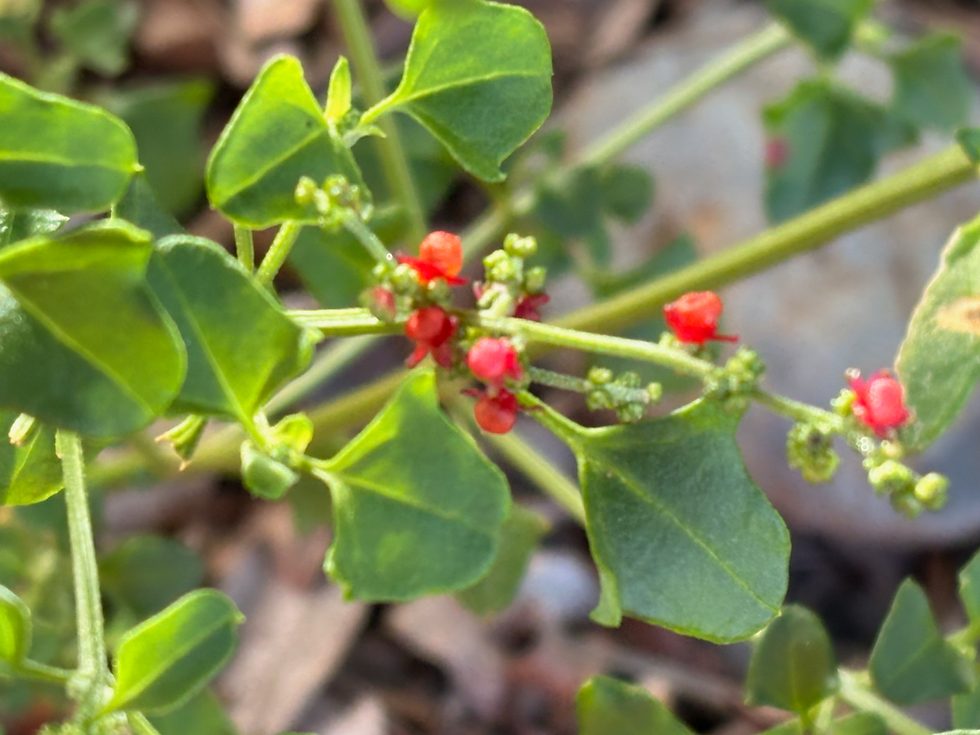
Some plants carry a kind of quiet authority. Einadia hastata he Berry Saltbush is one of
those. It grows low and wide, closer to the ground than you might expect, and it spends its
time doing something that takes most ornamental plants years to notice: offering itself, in
multiple directions, to almost everyone who passes.
Lizards. Insects. Pollinators. The dry summer. A garden trying to hold moisture in coastal
soil. And people, much further back than most of us realise. The leaves of Einadia hastata are something worth stopping for. Diamond-shaped, silver green, with a shimmer to them they catch the light differently depending on the angle, and that shimmer is not incidental.
The salt glands on the surface of the plant are part of what makes it so well adapted to its conditions, and they are what gives the leaves their particular texture and their particular story. The plant manages its own mineral content. It has been doing this for longer than any garden we might place it in.
The berries come through at different points in the year small, fleshy, a vivid red that
stands out against the silver foliage. Edible, though you would need to gather a fair few. The
flavour is slightly bitter, with that astringent quality that tells you something real is
happening in your body when you eat it. That bitterness is not a flaw. It is the same quality
that traditional food systems understood as rasayana a mineral-dense, body-supporting
note that comes from plants that have worked hard to be where they are.

In the garden
What I want to say about this plant in the garden is that it is not a compromise. It is not the
thing you plant where nothing else will grow, the last resort groundcover. It is the thing you
plant because you understand that a garden with lizards moving through low vegetation,
with insects sheltering beneath a canopy of silver leaves, with berries appearing in February
when almost nothing else is producing, is a different kind of garden.
Einadia hastata provides shelter and habitat that is genuinely used. Skinks and blue-
tongues move through it. Beneficial insects find cover in it. In the veggie patch it fits
naturally alongside edible plants, because it is one.
It is also fire retardant. That matters in coastal Sydney and in most of eastern Australia, and
it is worth saying plainly: the plant's moisture-retaining habit and low, spreading form make
it one of the sensible choices for gardens in areas with fire risk. The value of this is
understated in most planting guides, and I do not want to understate it here.
For summer, particularly this coming summer which is shaping up to be dry and hot
Einadia hastata is one of the most resilient plants I grow. Once established, it asks almost
nothing. It has adapted to coastal and inland dry conditions over thousands of years. A new
season of heat is not a problem for this plant.

First Nations uses
Einadia hastata was a resource, and understanding that changes how you look at it in the
garden. The leaves were used as a food source gathered and prepared by boiling, which did
important work. The high mineral and salt content of the leaves, left raw, would have been
too concentrated for regular consumption.
Boiling leached out the excess, making the leaves more palatable while preserving the nutritional value. What emerges from that process is something closer to a cooked green: mineral-rich, iron-containing, a native
vegetable in the full sense of the term. A spinach-like quality is often how it is described,
which seems right substantial, nourishing, something you would reach for when building
a meal rather than garnishing one.
The berries, in dry or coastal environments, offered sugar and moisture. Small amounts of
sweetness and hydration in a landscape that did not always offer them easily. The bitterness
I mentioned, the rasayana quality, would have been recognised rather than avoided.
Bitterness in traditional food knowledge signals mineral density, digestive support, and
something the body uses.
This is not incidental background. The plant was part of a careful, accumulative relationship
with country. Planting it now is one small way of continuing that.

Growing it
Einadia hastata establishes well in well-drained soils and full sun to part shade. It is low-
maintenance once it finds its position spreading laterally rather than climbing, covering
ground without needing management. Coastal conditions, sandy soils, exposed positions:
this plant is at ease in all of them. It does not need irrigation once established, though a little
support in the first season helps it settle.
It fits at the front of a border, at the edge of a path, in the difficult dry strip between fence
and footpath, in the veggie garden as an edible companion. It does several jobs without
being asked.
Available at Talulahhub
Einadia hastata is available now as tube stock from the nursery. I am also currently
propagating more the demand for reliable, drought-tolerant groundcovers with genuine
ecological value has been real this season, and I want to have enough to go around.
If you are thinking about summer and about what will still look right in February without
being watered twice a week, this is one of the answers.
The Silver-green leaves are still catching the morning light as I write this. The berries will
come, as they always do. The lizards already know about this plant. You do not have to convince the garden of anything. You just have to put the right things in it.
Happy Co-creating with Nature.🍃


Comments